The Nerve to Create Things
in a world trying to commodify life

“A picture is worth a thousand words.”
Someone coined that, who was it? Some guy in advertising? Confucius?
What does it mean?…
That a thousand words says a lot, that a picture communicates more clearly and instantaneously than words do?
That pictures are more valuable than words because we get to the point quicker?
Maybe because words are mainly linear and pictures are more abstract and nebulous?
Can a thousand words create a picture as effectively; are words cheap in comparison to what a picture can do?
Which has more inherent value?
Is art really about value, or is that just one way we are trained to look at it?
What about the artist? Can the artist make an accurate assessment on the value of the art they create?
Should art be quantifiable?
Do we do that anyways?
Is everything quantifiable?
Why should anything not be quantifiable, easy to label, conquerable and direct?
If pictures and words alike tell stories, what are we taking away from those stories?
What do those stories mean and how important are their messages?
Questions. Some of these are at the heart of where we are as a digital, AI slop-filled, online attention economy.
If you are a consumer of art - someone who appreciates art - you might have your own answers to these questions above based off your preferences. Maybe you’re right, and maybe you’re wrong.
If you are someone who creates art, not just a consumer or fan, you might have a different battle to fight here. You are well-acquainted with the social obligation to prove yourself valuable.
Why should anyone pay attention to you?
What important conversations are you bringing to the table?
What does your art have to do with what people want to see and hear right now?
Every creative person has to contend with or be swallowed in despair at not being able to answer these calls-to-action. Having to sit with the notion that your ideas, your works, only really mean anything to you and you alone, and probably aren’t for the world to appreciate.
But I am here to tell you, as well as many others, that chase for relevance and attention is only poisoning your thoughts, and by extension, all your creative and artistic efforts.
It’s no surprise that the advent of Gen AI is only interested in making things convenient, cheap, instant, and repeatable. It’s largely what most modern technology has been created for. Tech exists to make shopping, researching, learning, and yes, making a product quick, efficient, and results-based so that you can take your place in the future of innovation and capitalistic progress.
So, which art form is the most future-proof?
Which version of live performance, recorded or no, is going to resonate with the next generation?
Which are doomed to fall into obscurity in the next decade?
Who cares about those enough to keep them alive when they are clearly going to die anyway?
As a writer, an artist, a dancer, a teacher, and a performer, these questions have been at the forefront of my mind these past few weeks, while subconsciously tormenting me for years. If no one cares, what should I be doing differently?
I can’t bring myself to do anything different. Everything feels wrong, and as a result, I stew in my own self pity, creating nothing.
But now…
I think I know the answer, and it isn’t clean-cut, easily-digestible, or comforting in some cases, but it is my answer and the answer for many creative people in this AI-dominated age.
Being truly creative is being brave - not taking the easy way out or allowing the wrong voices to influence you.
While I have felt insignificant as a creatively-inclined person, I now can see that the loudest voices making me feel that way have more to gain from me NOT creating than creating.
There are lots of people out there who are losing their creative strengths, their artistic muscles are atrophying, and they are either unaware and miserable as a result, or they are aware and bitter.
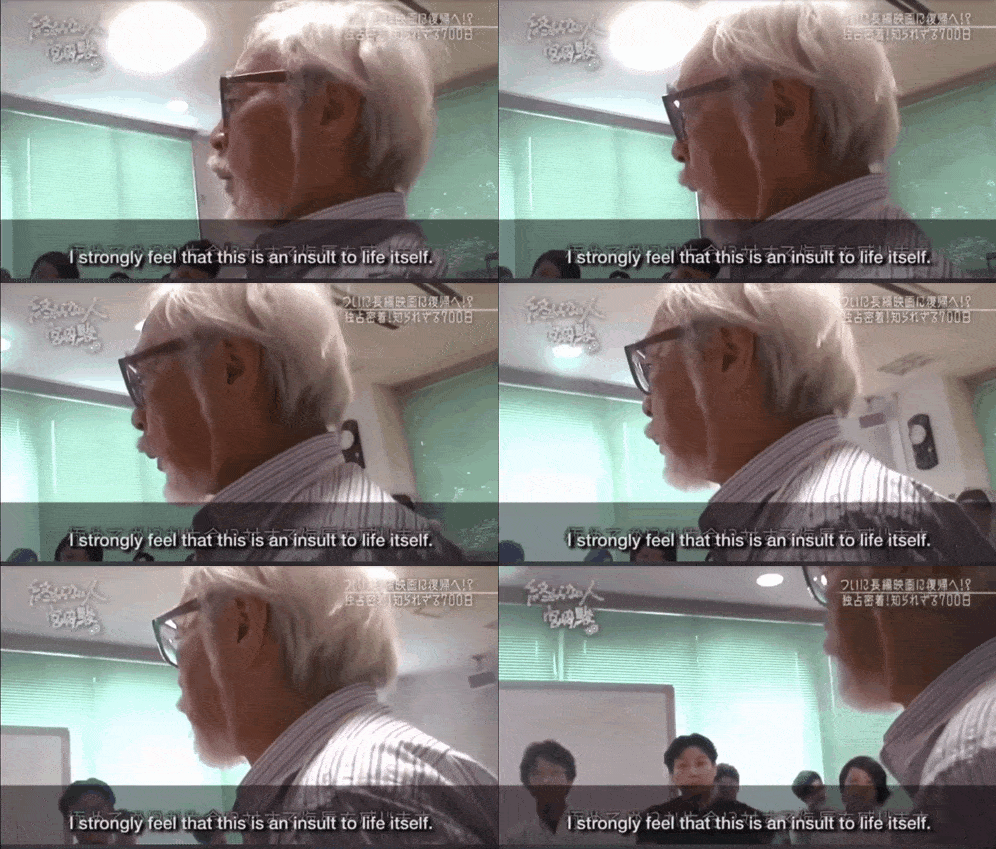
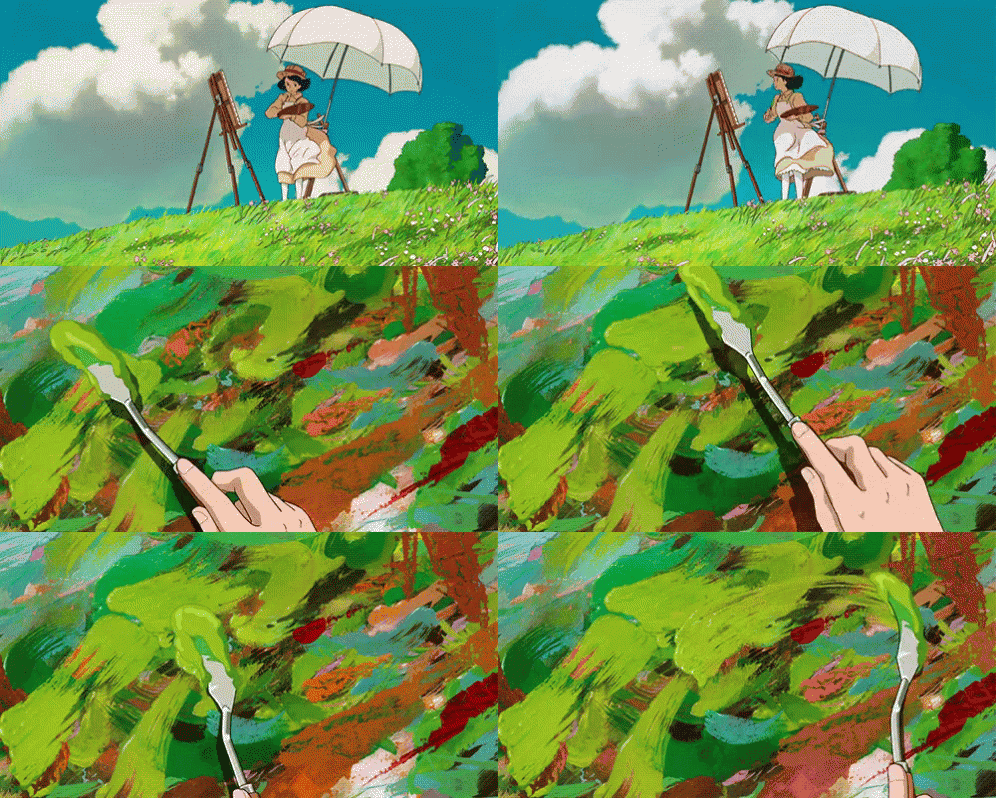
So they take out their frustration on people who are creating from their own flesh - their blood, sweat and tears - who use their own imperfect and abstract ideas to express themselves and their moral values in various colors, sounds, and languages. They are turning bitter, because the bravery they needed to continue to create was squashed or taken away.
My opinion is that, historically, the people who seem like they’re “winning” at life have really just been taken in by a lie that they can have it all in exchange for what makes them whole, their humanity.
“Do it our way.”
“Use our tools.”
“Use our words and phrases.”
“Dress like this.”
“If you do all that, then we’ll let you in the club.”
And what do they get in exchange? A shiny new toy? If they were actually part of the “club,” why are they still aching, striving for something more?
It’s because they already had everything they needed. They gave it all up for the toy.
One lousy toy. Talk about being scammed.
So, is a picture worth a thousand words?
Is there a version of artistic expression that is inherently more valuable than any other?
You might as well be asking if a certain color of the rainbow is more effective at being a color, when all of them are aspects of the same force - light.
And light is powerful.
Don’t take your eyes off the light.